150 grams
Do you know why cashmere costs so much? Because the raw material is rare. Cashmere production is based on the wool produced by the so-called common goat, the Capra hircus, the classic white goat, considered one of the 100 most invasive species in the world.
150 grams is the amount of cashmere a goat produces in a year. In fact, cashmere is obtained by combing the goat's neck, not shearing. And to produce cashmere, the goat must live in very cold regions, which develop secondary follicles creating this undercoat from which the wool is derived. Hand-combed, cared for, and prepared through a very labor-intensive process.
Why am I talking about cashmere? Recently, I attended a meeting for Young Industrials at Brunello Cucinelli. A 7 billion euro empire built on 150 grams and a small village, Solomeo—strange recipes for success and scalability.
This brings us to the crucial distinction between simple growth and sustainable scalability. While growth often refers to an increase in size or revenue, scalability is about building a business model that can effectively handle increasing demand without a proportional increase in resources or costs.
Scalability, as the name suggests, adds the dimension of longevity and resilience, ensuring that growth does not come at the expense of the company's fundamental elements. To scale, the trick is to ensure that there is always room to accommodate the next step. The definition of a "scalable enterprise" is an organization that can grow in size sustainably without causing everything to implode, in every part – its people, its processes, and its technology.
The Three Pillars of Sustainable Scalability
To achieve this sustainable scalability, entrepreneurs must go beyond simply pursuing growth and focus on building a solid, adaptable foundation. This requires a strategic approach that considers not only the "what" of expansion but also the "how" and the "why."
The "3 Pillars of Sustainability" – People, Processes, and Technology – serve as the fundamental framework for achieving this goal. Each pillar is interconnected and plays a vital role in building a scalable and sustainable enterprise. Ignoring any of these pillars can lead to imbalances that hinder long-term success.
People: Who First, Then What
During the visit to Brunello Cucinelli, I had the chance to hear the story of how the company's growth is continuing beyond the first generation.
What is striking about the new generation of Cucinellis is their serenity and simplicity, the calm tone with which they tell their story. Scrolling through Instagram profiles, you see people always present at events with movie stars. Yet, the company's employees tell, themselves with amazement, how the family is always present in the company. A sign of true leadership, not fabricated, that remains faithful to the vision.
In a company undergoing a profound generational transition, transparent governance tools are evident. I lingered after the event to talk with Stefanelli, the CEO. After all, I too was a CEO in Corciano, Cucinelli's municipality. With great naturalness, he answered my questions and, in the end, caught me off guard with "and what do you do now?". It seems obvious, but this question stunned me. I certainly couldn't tell the story of my 37th year of descent. After a moment of surprise, I replied that I help companies scale.
I wasn't ready, and I often think back to that exchange. His curiosity struck me. And I reflected on how much the company's scalability depends on its people.
Imagine the company as a bus traveling towards a specific destination. The first crucial choice is not the direction, but who gets on board. Who first, then what (From Good to Great). Because if you have the wrong people, even an amazing destination becomes unattainable. Conversely, if you have the right people, difficulties become opportunities, crises become moments of collective growth.
The right people are not necessarily the brightest, but those who know how to work together, set aside their egos, and focus on common goals.
Company culture, often underestimated, is the soil in which these people grow and develop.
A culture that rewards curiosity, open-mindedness, and continuous evolution, that fosters widespread accountability and distributed management. Culture is the set of values, customs, and beliefs lived daily.
You don't "create culture" in a nice brainstorming session, and you can't pretend to have a culture you don't possess. Culture must be extracted, gathered from what is believed and acted upon.
Technology
Brunello Cucinelli built his success at 25 when he realized he could dye cashmere.
For this idea, he invested his initial capital and immediately positioned the company in the luxury segment. To produce cashmere, he didn't choose to open a factory. Instead, he found collaborations with local tailors, artisans for generations, in Solomeo, the small village his wife came from.
When demand exploded, after more than 10 years of activity, Brunello had a group of people who put great care into the product's workmanship. And Brunello understood that this group needed to be organized, integrated, and cherished.
This is why Brunello Cucinelli created an internal school that elevates the quality of work.
He did this by staying within a castle, once dilapidated, instead of a factory, until the spaces were no longer sufficient. In the meantime, however, Brunello had the intuition and remained faithful to the idea of a deep integration between the territory and his creation. So he elevates the territory, doesn't remain passive waiting for public organizations to intervene, and rebuilds Solomeo, making it a place of art and, above all, continuous maintenance. Need gardeners? He trains them. Need masons? He trains them.
The impact of this pursuit of excellence is reflected in the technique and technology deployed by Cucinelli.
Technology is the true engine of modern scalability.
Technology acts as a force multiplier: it automates repetitive tasks, increases efficiency, generates fundamental data for strategic decisions, and creates connection platforms that leverage network effects, making each new user an added value for the entire ecosystem.
Investing in technology also means investing in people's training, creating internal platforms for continuous learning that enhance team skills. It means equipping oneself with tools like CRM, business intelligence, and analytics to predict customer needs and anticipate market trends.
Processes: The Backbone That Allows Scaling
Years pass, and Brunello Cucinelli's factory takes shape, expands, and organizes production lines with intensity, but always maintaining one element: beauty. Among the busts he installed in Solomeo, there is a quote from Socrates: "Beauty springs not from riches, but from virtue." Brunello Cucinelli owes much to the virtue that has accompanied him from the beginning to "give back."
Beauty gives man the ability to create, first with the mind, then with the hands. And at Cucinelli, beauty is brought by large windows that replace walls and bring real light into his factory.
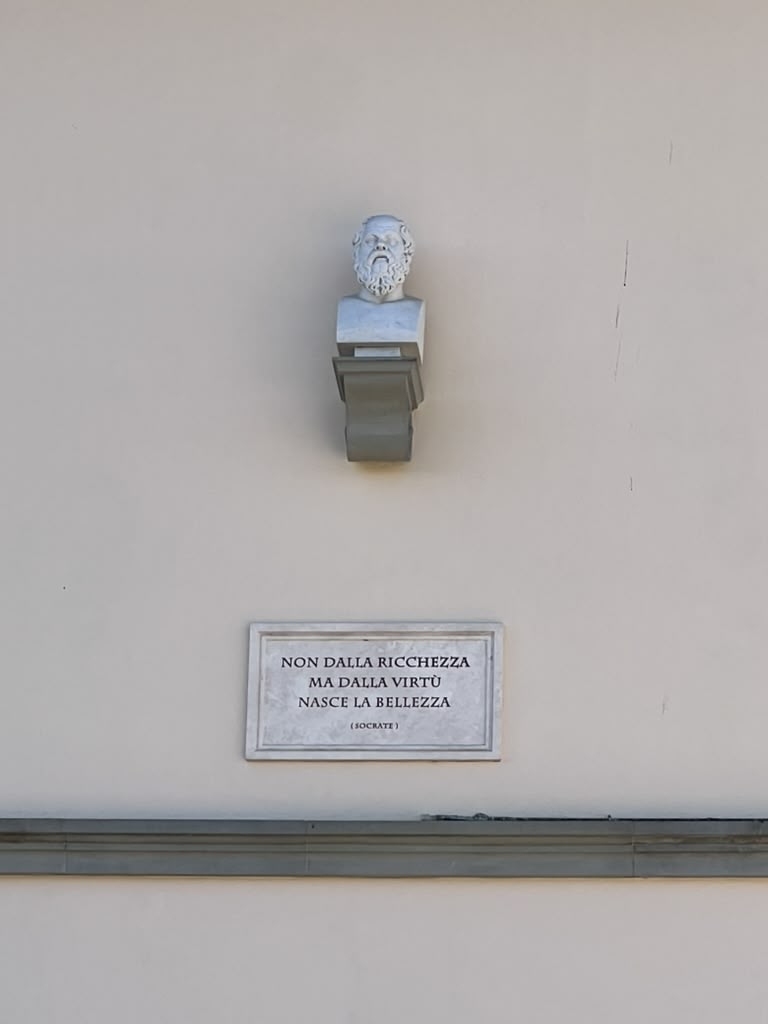 Beauty springs not from riches, but from virtue (Socrates)
If people are the flesh and blood of a company, processes constitute its backbone.
An enterprise aiming for sustainability must have clear, documented, and above all, dynamic processes. Processes capable of evolving and adapting to growth, because what works today for a small team might become a bottleneck tomorrow.
Managing by processes means placing operational efficiency at the center of decisions, constantly seeking to eliminate waste and inefficiencies. It's meticulous work, like that of a watchmaker, observing and adjusting every single gear so that everything functions perfectly. Long-term sustainability stems from this constant attention to operational details.
Furthermore, managing by processes means valuing existing relationships with customers, building loyalty through impeccable and personalized service. A deep and lasting relationship with acquired customers is the true asset of a scalable company because it adds value to the brand, helps build how others see us, and what comes to mind when they hear our name.
This is the result of Cucinelli's beauty: when you hold something beautiful, you can't let it break; you must cherish it and increase the value it brings.
Identifying Hidden Bottlenecks
Having well-defined pillars is not enough, because there are always hidden elements that hold back sustainable growth. These "bottlenecks" are like small invisible obstacles, similar to a loose screw that prevents a race car engine from expressing its full potential.
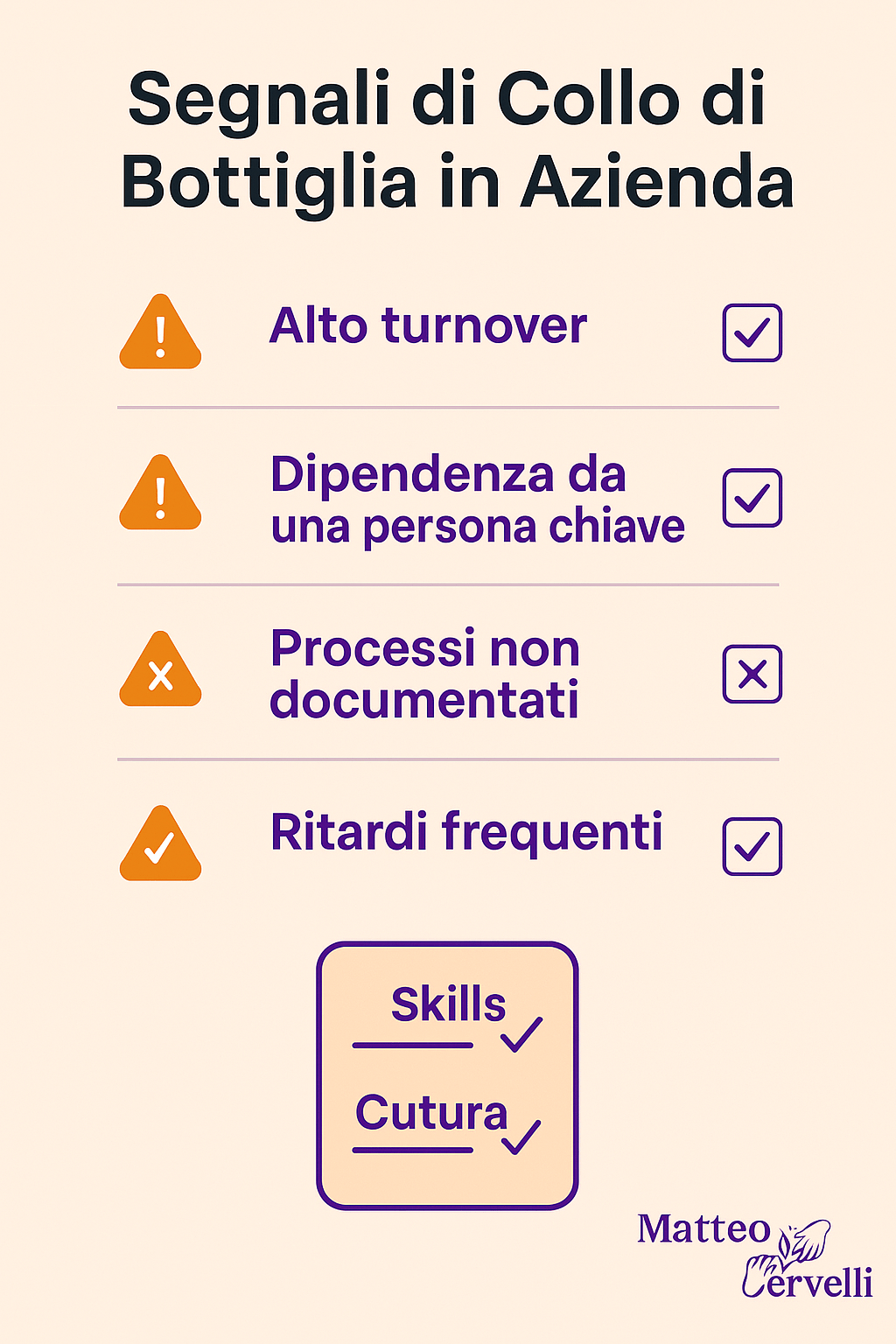
To help you identify these bottlenecks, I have a practical tool: the Scalability Self-Assessment Matrix. This tool, based on the three pillars, allows you to systematically explore your company, clearly revealing where to intervene to optimize your ability to scale.
Scalability is not a goal to be achieved once and for all, but a continuous journey. It requires constant attention, care, and the ability to adapt to changes. But it is precisely in this balance between people, processes, and technology that truly sustainable growth is born, ready to last over time and make a mark.
Discover Your Scalability Score
Quickly assess your company's scalability potential through a structured test that analyzes the 12 key factors determining sustainable growth capacity.
Calculate Your Scalability ScoreI leave you with a question that I hope accompanies you on this path: which of the three pillars currently represents the greatest limitation to your growth? And what can you do, starting today, to begin overcoming it?
Scalability is made of small, decisive steps, day after day. Start now.